
29.05.2026
Knowledge Sharing 2026: From Why to How
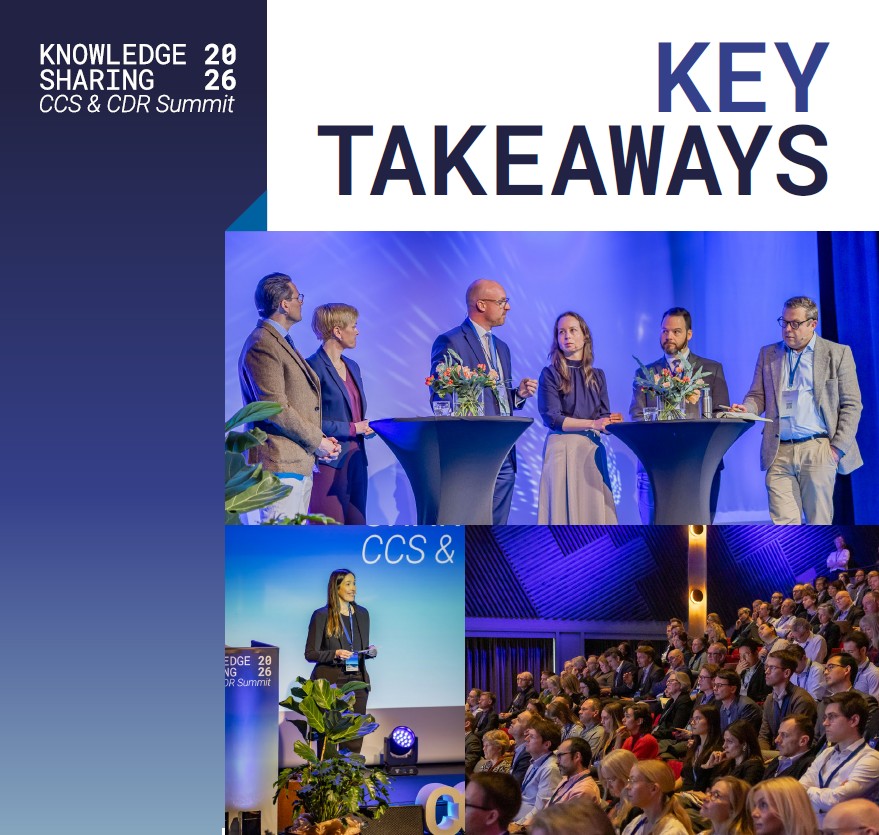
Knowledge Sharing 2026 reinforced the importance of collaboration and knowledge sharing to move CCS and CDR from ambition to delivery. A clear takeaway from this year’s summit was the shift from “why” to “how” — from justification to execution. The summit report has now been published.
Technology is no longer the primary constraint. Instead, challenges related to value chain integration, access to transport and storage, standardisation, and credible monitoring, reporting and verification (MRV) are increasingly decisive. Projects perform best when CCS and CDR are approached as integrated value chains, with clear ownership and strong coordination from an early stage.
What will drive progress going forward?
Project maturity is critical. High-quality front-end planning, disciplined change control, and early operational readiness reduce risk and improve cost and schedule performance. At the same time, access to transport and storage infrastructure remains a key gating factor across Europe. Here, hub-based systems and flexible solutions stand out as important enablers for scale.
Greater standardisation and alignment are also needed, particularly related to CO2 specifications and MRV. More robust and practical frameworks will help build trust and unlock investment. Predictable conditions and improved risk management are key to ensuring bankability.
Operational experience is another central takeaway. Projects such as Longship provide valuable insights that help reduce cost and risk for future developments. Open knowledge sharing and stepwise scale-up will be essential going forward.
For CDR, delivery discipline must be combined with market development. Stronger demand, clearer frameworks, and continued government support will be necessary to achieve scale.
These are just some of the insights from this year’s summit.